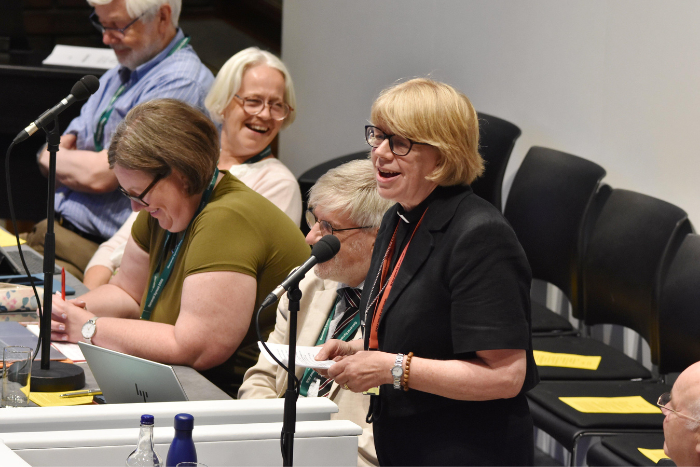
Photo Credit: Sam Atkins Church of England
Members of the Church of England Synod have approved a proposal for more training on neurodiversity and to establish a new network of 'Neurodiversity Champions’ throughout its dioceses, based on the model of their current disability advisers network.
On July 10, the Church of England shared that ‘Neurodivergent people, who include autistic people, people with ADHD (Attention Deficit Hyperactivity Disorder) and those with dyslexia or dyspraxia, are a blessing to the church and wider society and their experience adds to the richness of experience of all’. The General Synod also heard about the ‘discrimination’ that the neurodiverse can face in society and church settings and discussed the ‘barriers that prevent them from flourishing’ in those contexts.
The Archbishop of Canterbury, the Most Revd and Rt Hon Dame Sarah Mullally, was one of the speakers in the debate, describing how her own dyslexia had led to a perceived restriction on her potential to achieve. ‘In my life I have had to face the views of those who thought that I wouldn’t amount to much’, Archbishop Sarah shared. ‘I struggled at school and it was at a time when we were given very little support and therefore very little opportunity to help me to understand how I could overcome the challenges that dyslexia presented me.’
Archbishop Sarah added that despite these challenges, she has learned ‘that I am made in the image of God and that I am called as somebody who is dyslexic - not despite dyslexia… sometimes because of dyslexia. I now speak more regularly about my dyslexia because I hope that by sharing my own experiences, I might offer some encouragement that we are a Church of all kinds of people. Neurodiversity is not a problem to be solved within the Church, but it is a gift.’
In addition to being the 106th Archbishop of Canterbury and notably the first ever woman to hold the position, Archbishop Sarah was also formerly the Bishop of London and the youngest Chief Nursing Officer for England.
Opening the debate, Diocese of London General Synod member Fiona MacMilla from the Church of England’s Neurodiversity Working Group of the Committee for the Ministry of and among Deaf and Disabled People (CMDDP - a group focused on removing the barriers faced by disabled and neurodivergent people within the province) spoke of diagnoses she has had since the age of 40 of ADHD, Tourette’s and autism.
‘These three diagnoses each came as a surprise, a serial unveiling of reasons for lifelong struggle and, initially, a source of shame, grief and relief, before I gradually grew to understand and know myself as fearfully, wonderfully and intentionally made by God, with my particular combination of needs and gifts,’ she said.
The resolution approved by the Synod of the Church of England is as follows:
All kinds of minds: Affirming neurodiversity in the life of the church
‘That this Synod: recognising neurodivergent people, lay and ordained, as lovingly and purposefully made and a blessing to the church and wider society whose experience adds to the richness of experience of all; and acknowledging the need to work towards the removal of barriers to their flourishing at every level of the church by challenging and transforming unjust structures & processes which disadvantage and discriminate against them, therefore:
a) affirm the work of the national Neurodiversity Working Group, and encourage National Church Institutions and other Church Bodies to develop inclusive practices and policies which promote the flourishing of neurodivergent people.
b) affirm the importance of, and need for, neurodivergent-led neurodiversity training throughout the church, and encourage the church at all levels to develop appropriate training led and shaped by neurodivergent people that builds understanding and confidence in the ministry of, with and among neurodivergent people.
c) call on each diocese to appoint neurodivergent people as Neurodiversity Champions, following the pattern of the existing Diocesan Disability Advisors network, ensuring the role is appropriately embedded within diocesan structures so they may be best placed to contribute to the identification and removal of barriers.
d) encourage all churches and church members to listen and respond to the experience of neurodivergent people in their specific local contexts to enable the flourishing of all.’
End of resolution
Embracing disability and neurodiversity in the wider Anglican Communion
At the nineteenth meeting of the Anglican Consultative Council (ACC-19), which took place in Belfast recently, the ACC also approved a resolution acknowledging the number of people who have physical, emotional, sensory, developmental and intellectual disabilities across the worldwide Anglican Communion, which could potentially create barriers to church participation. The resolution encourages the further development of an informal disability network and calls on the Anglican Communion to engage with the journey to becoming ‘fully disability inclusive’.
More information
Read about the Synod resolution on the Church of England website.
Learn more about the Church of England Committee for the Ministry of and amongst Deaf and Disabled People (CMDDP).
See the Anglican Consultative Council’s recent resolution about journeying towards a Communion-wide Disability Network.