The nineteenth meeting of the Anglican Consultative Council (ACC-19) heard from the Anglican Communion Science Commission (ACSC) on Friday, July 3, learning more about its work in helping churches engage confidently with science and technology.
Established following the Lambeth Conference in 2022, the Commission seeks to encourage collaboration between faith and science, equipping churches to engage with issues such as artificial intelligence, climate change and healthcare while reflecting the Anglican Communion's Five Marks of Mission.
The presentation began in an unusual way with an artificial intelligence-generated reading based on the Gospel story of St Matthew. The reading was presented by Ms Agnes Chiu Ki Lam from Hong Kong, a member of both the Anglican Communion Youth Network and the Anglican Communion Science Commission.
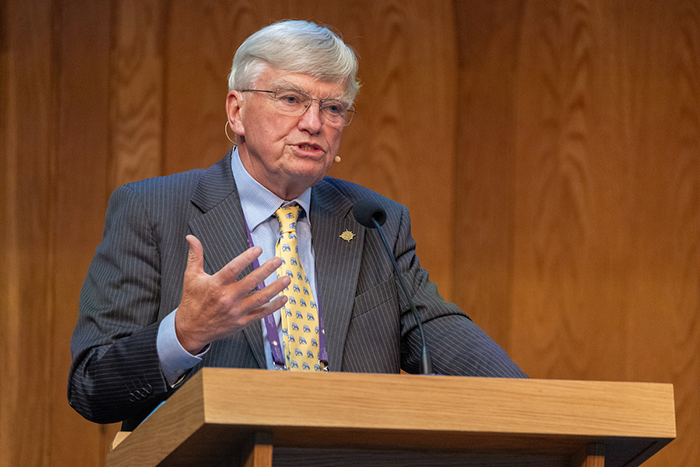
Professor Andrew Briggs reflects on the relationship between science and faith.
Science as a gift from God
Professor Andrew Briggs, a scientist at the University of Oxford and one of the Commission's directors, reflected on the relationship between science and Christian faith. Building on the AI-generated reading, he described science as ‘a God-given resource’ that inspires ‘awe and wonder, praise and worship,’ encouraging churches to see scientific discovery as something that can deepen faith rather than diminish it.
Speaking about artificial intelligence, Professor Briggs said the Church has an important role in helping society engage thoughtfully with emerging technologies.
‘If you're using a smartphone, you're using AI — and you're being used by AI,’ he said, encouraging the Church to think carefully about the ethical questions raised by artificial intelligence.
He highlighted the growing importance of the Church's voice in these conversations, noting that one of the first interventions by the Archbishop of Canterbury, the Most Revd and Rt Hon Dame Sarah Mullally, in the House of Lords focused entirely on artificial intelligence and its ethical implications.
Professor Briggs also referred to Magnifica Humanitas (‘Magnificent Humanity’), the first encyclical of Pope Leo XIV, which reflects on humanity's relationship with technology and the digital revolution.
Learning from local and Indigenous knowledge
Looking back over the Commission's work since ACC-18, Professor Briggs highlighted a series of regional consultations with bishops from Africa, the Caribbean and Oceania. He said these conversations had emphasised the importance of local and Indigenous knowledge, the need to build trust and inclusion, and the value of bishops learning from one another as they engage with scientific issues in their own contexts.
He also spoke about the first global consultation of Provincial Lead Science Bishops, held at Virginia Theological Seminary in 2024. Bringing together twenty-two bishops from across the Anglican Communion, the gathering encouraged participants to reflect on the scientific challenges facing their provinces and to develop plans suited to their own local contexts.
Delegates also heard about a number of resources produced by the Commission. These included Wholesome Ecology for a Wholesome Nation, a contextual Bible study series prepared by the Rt Revd Dr Emily Onyango, Assistant Bishop in the Anglican Church of Kenya, together with a podcast series produced by the Church of Ireland exploring the question, ‘How can you be a scientist and a Christian?’
Supporting young Anglicans in science
Looking to the future, Professor Briggs introduced the Fellowship of Young Anglican Science Enthusiasts (FYASE), a joint initiative of the Anglican Communion Science Commission and the Anglican Communion Youth Network.
The fellowship encourages young Anglicans working in science to explore the relationship between their faith and their profession while supporting projects relating to climate change, healthcare and bioethics, and artificial intelligence. He also announced that the fellowship has received support from the Templeton World Charity Foundation to provide small grants for projects developed by young people within their own provinces under the guidance of regional Lead Science Bishops.
Reflecting on the work of the Commission, Professor Briggs said its role was to strengthen the Church's ministry rather than create something separate.
‘Our Science Commission is not doing the work of the Church,’ he said. ‘It is part of the supply chain of the work of the Church. It enables the Church to do better what we already care about... promoting human flourishing and showing God's heart to people.’
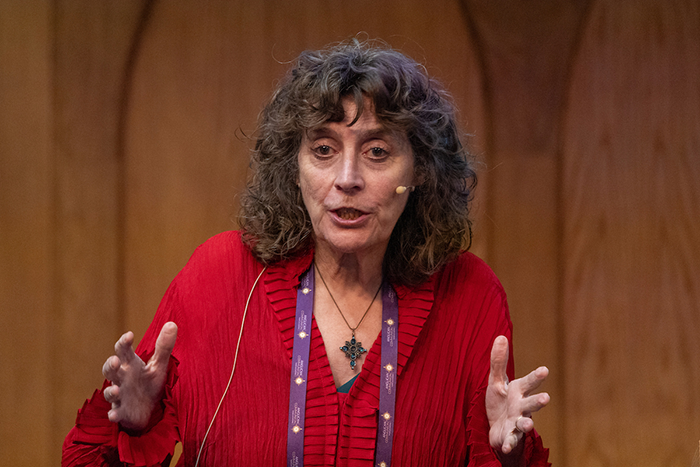
Dr Heather Payne facilitates a conversation between science and faith.
Following the presentation delegates met in table groups to discuss the work of the Science Commission. The conversations were facilitated by Dr Heather Payne, a consultant paediatrician, public health specialist and member of the Commission.
Equipping Christian leaders to engage with science
The final presentation came from the Revd. Dr Muthuraj Swamy, who serves as Theological Facilitator and Researcher for the Anglican Communion Office's Equipping Christian Leadership in an Age of Science (ECLAS) project.
He described ECLAS as an initiative that equips Christian leaders with the confidence and resources to engage positively with science, encouraging dialogue rather than conflict between faith and scientific discovery.
Looking ahead, he shared plans for ECLAS' next international gathering, to be held in September 2026 under the theme Science, Technology, and the Church's Voice in a Polarised and Populist Age. The meeting will bring together Lead Science Bishops and church leaders from across the world to consider how the Church can speak thoughtfully and faithfully on scientific issues in an increasingly divided world.
The presentation demonstrated the Anglican Communion's growing commitment to engaging with science as a gift from God and encouraging churches to respond faithfully to the opportunities and challenges presented by scientific discovery.
Learn more
For more information about the Anglican Communion Science Commission